


As a fertility doctor, every day I diagnose a patient with perimenopause—but I call it diminished ovarian reserve (DOR). In essence, when you egg count starts to decrease, the communication between the brain and ovary changes, resulting in hormone shifts prior to abnormal cycles. Many women though don’t realize that 1) going into menopause early is one the few predictive factors negatively impacting your longevity and future health and 2) the onset of your menopause transition is not a predetermined date. Meaning, the world around you (and chronic inflammation) influences when you ovary stops functioning.
I’ll be honest, the classic training of “you are born with all the eggs you have and run out of them over time” makes you think that egg depletion is what results in loss of ovarian function. And yes, having no source to gain new eggs does put a finality on ovarian function for each women, the processes involved in ovarian aging are actually much more involved.
Premature menopause is ovarian failure before age 40 and impacts 1% of women globally. Since estrogen is protective in multiple organ systems for women, premature menopause carries significant long term health risks, including: risk of cardiovascular disease, osteoporosis, type 2 diabetes, depression, anxiety and more.
Causes of premature menopause include both genetic and environmental factors. Oxidative stress plays a big role in aging across all tissue types, thought of as when the balance between exposure to inflammation is greater than the body’s ability to repair.
This study looks at something I am extremely interested in: what is the relationship between oxidative stress and ovarian aging? What factors are more clearly associated with an increase in premature menopause? And since oxidative stress is a response to the world around us, what can we do with this information to try and improve our ovarian function, ovarian reserve, and egg quality—in addition to potentially delaying the onset of ovarian failure?
Study: Nonlinear Association Between Oxidative Balance Score and Premature Menopause: A Cross-Sectional Analysis of NHANES 2007-2018 Data
Journal: Journal of International Women’s Health
Why this study caught my attention:
So today I am reviewing:
What are the hallmarks of ovarian aging
A breakdown of this study
What prior research showed
What you should do with this information
Hallmarks of Ovarian Aging
Ovarian aging has long believed to be an immovable reality. We all have our own timeline, and our ovaries age like any other cell. However, I want you to start thinking about ovarian aging as a spectrum—although it is inevitable, we can do things to speed it up or slow it down.
Researchers have categorized cellular aging into three categories of hallmarks: 1) primary, 2) integrative and 3) antagonist. Primary contributors to aging are due to damage that accumulate with time (like genetics), antagonistic processes reflect an abnormal response to damage (like mitochondrial dysfunction), and the integrative hallmarks are when the accumulated damage from primary and antagonistic sources can no longer be contained (like chronic inflammation and gut dysbiosis).
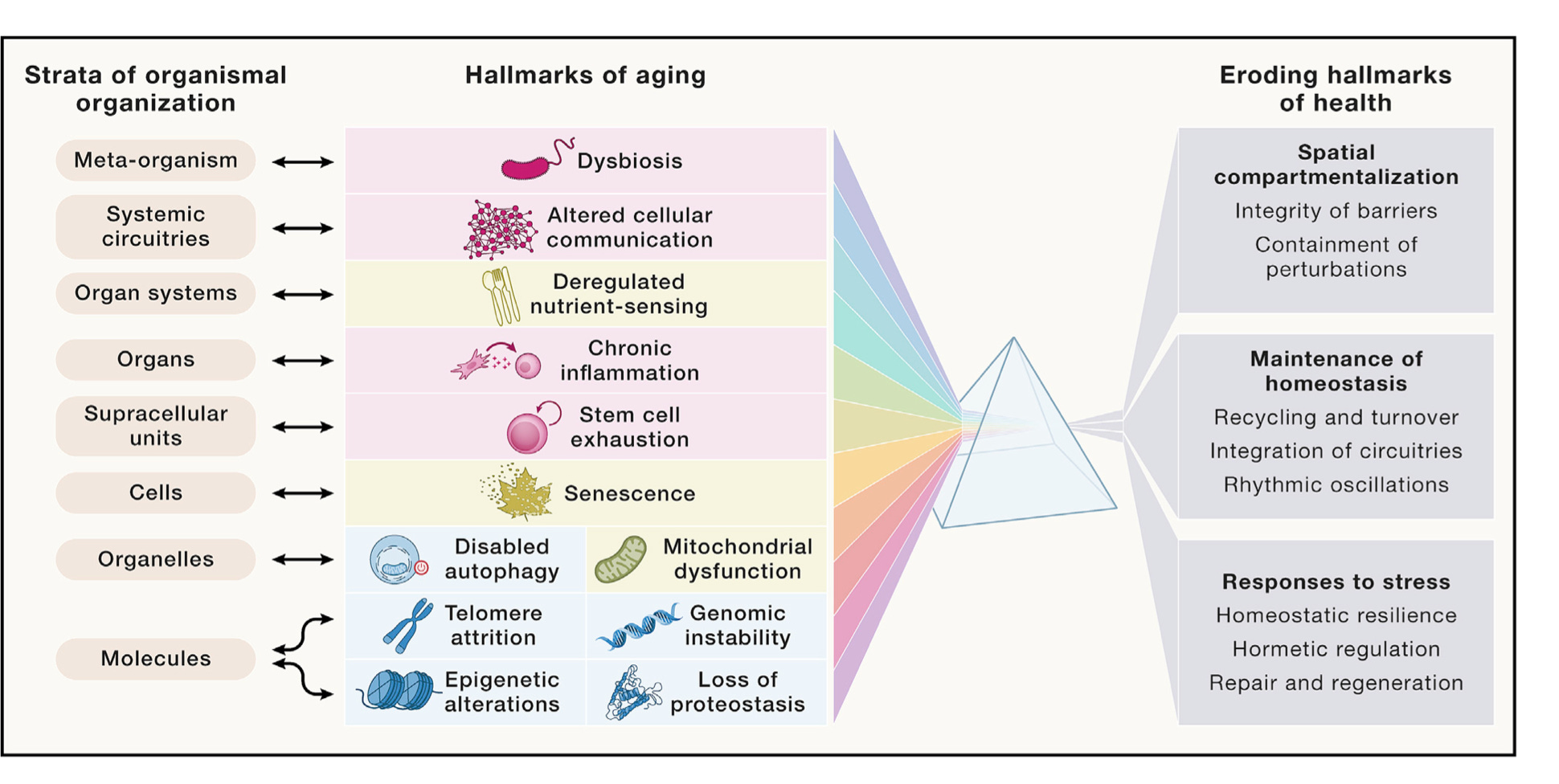
I like to think about it like this: we will be exposed to our world and our cells will constantly be challenged. When we can no longer keep up with the damage, when our cells can no longer repair and continue to function normally, damage will begin to accumulate at a faster rate. The onset of symptoms from this damage occurs once we are well into this process, but acting as if aging is an unmovable future is faulty. Yes, your ovaries will age. But the pace of which they age controls your longevity, and the opportunity for the biggest intervention is before ovarian failure. This is how we start to change the pace of ovarian aging by understanding the factors at play in our body and starting to make changes to improve cellular health and function.
